What is Blepharoplasty?

What are the benefits of blepharoplasty surgery?
Blepharoplasty surgery offers a range of benefits, both functional and aesthetic, for individuals seeking to improve the appearance and function of their eyelids.
Here are some of the key benefits:
Aesthetic Benefits:
- Youthful Appearance: Removes excess skin, fat, and muscle from the eyelids, resulting in a more youthful and refreshed appearance for busy Short Pump and Glen Allen professionals.
- Reduced Puffiness and Bags: Eliminates puffiness and bags under the eyes, which can make individuals appear tired or older.
- Improved Eyelid Contour: Restores a smoother and more defined contour to the upper and lower eyelids.
- Elimination of Wrinkles: Minimizes the appearance of wrinkles and fine lines around the eyes, commonly known as crow’s feet.
- Enhanced Symmetry: Corrects asymmetry between the left and right eyelids for a more balanced facial appearance.
- Enhanced Confidence: Boosts self-esteem and confidence by addressing concerns about the appearance of the eyes and eyelids.
Functional Benefits:
- Improved Vision: Corrects drooping upper eyelids that may obstruct vision, allowing individuals to see more clearly and comfortably.
- Easier Eyelid Closure: Addresses functional issues such as difficulty closing the eyelids fully, which can lead to dryness and irritation.
- Alleviation of Discomfort: Relieves discomfort caused by excess skin rubbing against the eyes, leading to a more comfortable experience.
Psychological Benefits:
- Increased Satisfaction: Provides individuals with a sense of satisfaction and fulfillment by addressing long-standing concerns about their eyelids.
- Reduced Self-Consciousness: Diminishes feelings of self-consciousness or embarrassment associated with the appearance of the eyes and eyelids.
- Positive Impact on Mental Health: Improves overall mental well-being by enhancing self-image and reducing psychological distress related to cosmetic concerns.
Long-Term Benefits:
- Lasting Results: Offers long-lasting results that can persist for many years, especially when combined with proper skincare and sun protection.
- Age-Defying Effects: Slows down the visible signs of aging around the eyes, allowing individuals to maintain a more youthful appearance over time.
- Potential Prevention of Future Issues: Prevents or delays the development of certain eyelid-related issues, such as ptosis (drooping eyelids) or dermatochalasis (excess eyelid skin), in the future.
Overall, blepharoplasty surgery provides numerous benefits that extend beyond mere cosmetic improvement, enhancing both the appearance and function of the eyelids while positively impacting an individual’s confidence and quality of life.
Words of Praise

Who is the ideal candidate for a blepharoplasty in Richmond VA?
An ideal candidate for blepharoplasty typically meets several criteria related to their overall health, specific concerns about their eyelids, and realistic expectations about the outcomes.
Key factors that make someone a good candidate for eyelid surgery in Henrico, Short Pump or Mechanicsville are:
- Excess Skin: Those with excess skin that creates folds or disturbs the natural contour of the upper eyelid.
- Puffiness: Individuals with puffiness due to fat deposits in the upper eyelids.
- Bags Under the Eyes: Those with bags or dark circles under the eyes, often caused by fat deposits.
- Drooping Lower Eyelids: Candidates who have drooping lower eyelids that show white below the iris.
- Functional Impairments: People whose sagging upper eyelids interfere with their vision, such as difficulty seeing the upper portion of their visual field.
Most candidates are adults, typically over the age of 35. However, younger individuals with hereditary conditions affecting the eyelids may also be suitable candidates.
Who is not a good candidate for a blepharoplasty?
Individuals with any of the following issues may not be a good candidate for a blepharoplasty surgery or eyelid surgery in Richmond, Chesterfield and Laurel:
Medical Conditions
- Serious Health Issues:
- Uncontrolled Diabetes: Poor blood sugar control can impair wound healing and increase the risk of complications.
- Cardiovascular Diseases: Conditions like heart disease may pose risks during surgery and recovery.
- Bleeding Disorders: Conditions that affect blood clotting can lead to excessive bleeding during or after surgery.
- Eye Conditions:
- Severe Dry Eye Syndrome: This condition can worsen after surgery.
- Glaucoma: Increased intraocular pressure could be exacerbated by surgery.
- Retinal Detachment: Individuals with a history of retinal detachment may be at higher risk.
- History of Eye Infections: Frequent eye infections or chronic conditions affecting the eyes can increase the risk of complications.
- Autoimmune Diseases: Conditions like lupus or Graves’ disease can affect the skin and overall healing process.
Lifestyle Factors
- Smokers: Smoking impairs healing and increases the risk of complications. Candidates must be willing to quit smoking well in advance of the surgery and during the recovery period.
- Poor Overall Health: Individuals who are generally unwell or have a weakened immune system might face a higher risk of complications and prolonged recovery times.
Psychological Factors
- Unrealistic Expectations: Candidates who have unrealistic expectations about the outcomes of blepharoplasty may be disappointed with the results.
- Body Dysmorphic Disorder: Those with this condition may have a distorted view of their appearance and may not be satisfied with surgical outcomes.
Anatomical Considerations
- Poor Skin Elasticity: Individuals with very poor skin elasticity may not achieve the desired results from blepharoplasty.
- Previous Surgeries: Those who have had multiple previous eyelid surgeries might have scar tissue or altered anatomy that complicates further procedures.
Other Factors
- Pregnancy: Pregnant women should avoid elective surgeries due to potential risks to both the mother and the fetus.
- Unmanaged Chronic Conditions: Conditions like hypertension or thyroid problems that are not well-controlled can increase surgical risks.
How is a blepharoplasty performed?
A blepharoplasty (eyelid surgery) is a surgical procedure performed to improve the appearance of the eyelids by removing excess skin, muscle, and fat. It can be done on the upper eyelids, lower eyelids, or both in Highland Springs.
Here is an overview of how a typical blepharoplasty is performed:
1. Anesthesia
- Local Anesthesia with Sedation: Most blepharoplasty procedures are done with local anesthesia, where the area around the eyes is numbed, and light sedation is given to help the patient relax.
- General Anesthesia: In some cases, especially when combined with other procedures or for patient comfort, general anesthesia may be used.
2. Incision Placement
The surgeon will make precise incisions depending on whether the surgery is for the upper eyelids, lower eyelids, or both:
- Upper Eyelid Blepharoplasty: The incision is made along the natural crease of the upper eyelid, which helps hide the scar once healed. Through this incision, the surgeon can remove or reposition fat, muscle, and skin.
- Lower Eyelid Blepharoplasty: The incision is usually made just below the lower lash line or inside the lower eyelid (called a transconjunctival incision). The latter leaves no visible external scar. The surgeon can remove or reposition excess fat and tighten skin through these incisions.
3. Removal of Excess Skin, Fat, and Muscle
- Fat Removal or Repositioning: Bulging fat that causes puffiness or bags is either removed or repositioned to create a smoother contour around the eye.
- Excess Skin Removal: For upper eyelids, excess skin and muscle may be trimmed away to reduce drooping or sagging. On the lower eyelid, this is less common but may be done for patients with excess sagging skin.
4. Tightening of Muscles
- In some cases, the surgeon may tighten the underlying muscles around the eye to provide additional support and create a more youthful appearance.
5. Closing the Incisions
- Suturing: The incisions are closed with very fine sutures. For upper eyelid bleph, these are typically along the natural crease, while for lower eyelids, sutures may be placed just below the lash line or inside the eyelid.
- Skin Adhesives or Surgical Tape: These may also be used to support the closure of the incisions and aid in healing.
6. Post-Surgery Dressing and Care
- Ointment and Cold Compresses: After the procedure, an ointment may be applied to prevent dryness in the eye area, and cold compresses are often used to minimize swelling and bruising.
- Eye Shields or Bandages: Depending on the surgeon’s protocol, you might be given eye shields or dressings to protect the eyes during early recovery.
Procedure Duration
- A typical blepharoplasty procedure takes about 1 to 2 hours, depending on whether both upper and lower eyelids are being treated.
Blepharoplasty can be performed alone or in combination with other facial procedures, such as a facelift or brow lift, to achieve a more comprehensive rejuvenation. It is important to consult with an expert eyelid plastic surgeon near me, like Dr. DeConti, so you can decide what are the best options and techniques for you.
What do I need to do before my blepharoplasty surgery?
Preparing for eyelid surgery, or blepharoplasty, is important to ensure the best possible outcome and smooth recovery.
Here are the key steps you need to take before the procedure:
1. Medical Evaluation
- Consultation: Dr. DeConti will assess your overall health, discuss your goals for the surgery, and review your medical history.
- Physical Examination: This may include an exam of your eyes, including vision tests, to determine the extent of the eyelid surgery and if it may impact your vision.
- Blood Tests: You may need blood tests to ensure you’re healthy enough for surgery.
- Other Tests: Depending on your age and health, your doctor might recommend other tests like an EKG (heart test).
2. Medications
- Adjust Medications: You may be advised to stop taking certain medications or supplements, especially those that increase bleeding, such as aspirin, ibuprofen, naproxen, and certain herbal supplements (e.g., ginkgo biloba, garlic, vitamin E). Your surgeon will provide a specific list.
- Prescriptions: Your surgeon may prescribe medications (e.g., antibiotics, painkillers) to take before or after the surgery. Make sure you get them filled before surgery day.
3. Stop Smoking and Alcohol
- Quit Smoking: Smoking can impair healing, so it’s usually recommended to quit smoking at least 4–6 weeks before surgery and for several weeks afterward.
- Limit Alcohol: Avoid alcohol for at least a week before surgery, as it can thin your blood and increase the risk of complications.
4. Arrange Transportation and Aftercare
- Transportation: Since blepharoplasty is often done on an outpatient basis, arrange for someone to drive you home after the surgery.
- Aftercare: Have someone available to stay with you for at least the first night post-surgery, as your vision may be blurry, and you may need assistance.
5. Prepare for Recovery
- Stock up on Supplies: Gather cold compresses, eye drops, gauze, clean towels, and any other post-operative care items. Sunglasses may also help protect your eyes from bright light and irritation.
- Set Up a Comfortable Recovery Space: Prepare a quiet, comfortable place at home where you can rest, with pillows to keep your head elevated.
6. Stop Wearing Contact Lenses
- If you wear contact lenses, you may need to switch to glasses for a few days before surgery and for a period after the surgery while your eyes heal.
7. Fast if Required
- If general anesthesia or sedation will be used, you may need to fast (avoid food and drink) for several hours before surgery. Follow your surgeon’s instructions carefully.
8. Shower and Avoid Makeup
- On the day of surgery, it’s important to shower and cleanse your face thoroughly. Avoid wearing any makeup, lotions, or creams on your face or around your eyes.
9. Plan for Time Off
- Recovery time typically ranges from 1 to 2 weeks. You may experience swelling, bruising, and blurred vision during this period, so plan for time off work and social activities.
10. Follow Specific Surgeon Instructions
- Your surgeon will provide personalized pre-op instructions, including any special precautions. Be sure to follow these closely for optimal results.
By preparing properly, you can help ensure your eyelid surgery goes smoothly and that you have a quick, comfortable recovery.
What should I expect on the day of my blepharoplasty?
On the day of your blepharoplasty surgery, it’s normal to feel a mix of excitement and perhaps a bit of nervousness.
Here’s what you can generally expect on the day of your procedure:
Preoperative Preparation:
- Arrival: You will likely be asked to arrive at the surgical facility or hospital well in advance of your scheduled surgery time.
- Check-in Process: Upon arrival, you’ll check in with the reception or admitting staff, who will guide you through the necessary paperwork and administrative procedures.
- Preoperative Assessment: A nurse or medical assistant will conduct a preoperative assessment, which may involve checking your vital signs, reviewing your medical history, and ensuring that all necessary preparations are in place.
- Final Consultation: You may have a final consultation with your surgeon to review the surgical plan, discuss any last-minute questions or concerns, and sign consent forms.
Preoperative Procedures:
- Preparation for Anesthesia: If your surgery requires general anesthesia or sedation, an anesthesiologist or nurse anesthetist will meet with you to discuss the anesthesia plan and administer any necessary premedication.
- Marking the Surgical Site: Your surgeon may mark the areas to be treated with a surgical marker while you are in an upright position. This helps ensure accuracy during the procedure, especially for eyelid surgery.
- Prepping the Surgical Area: The surgical team will clean and sterilize the surgical site to reduce the risk of infection.
During the Procedure:
- Anesthesia Administration: Once you are in the operating room, anesthesia will be administered according to the predetermined plan. You’ll either be fully asleep under general anesthesia or sedated but conscious under local anesthesia with sedation.
- Surgical Procedure: The blepharoplasty procedure will be performed according to the surgical plan discussed with your surgeon. The specifics of the surgery will depend on whether you are having upper eyelid, lower eyelid, or both eyelids treated.
- Monitoring: Throughout the procedure, your vital signs, such as heart rate, blood pressure, and oxygen saturation, will be closely monitored by the anesthesia team and nursing staff.
Postoperative Recovery:
- Recovery Room: After the surgery is completed, you will be taken to a recovery area where you will be monitored closely as you wake up from anesthesia.
- Pain Management: You may experience some discomfort or pain after the surgery. Your surgical team will provide appropriate pain management medication to keep you comfortable.
- Observation: You’ll remain under observation for a period of time to ensure that you are stable and recovering well from the anesthesia and surgery.
- Discharge Instructions: Once you are fully awake and stable, your surgeon or a member of the medical team will provide detailed discharge instructions, including how to care for your incision sites, manage any discomfort, and schedule follow-up appointments.
What to Expect During Recovery from a Blepharoplasty
The Recovery Timeline: A Step-by-Step Overview
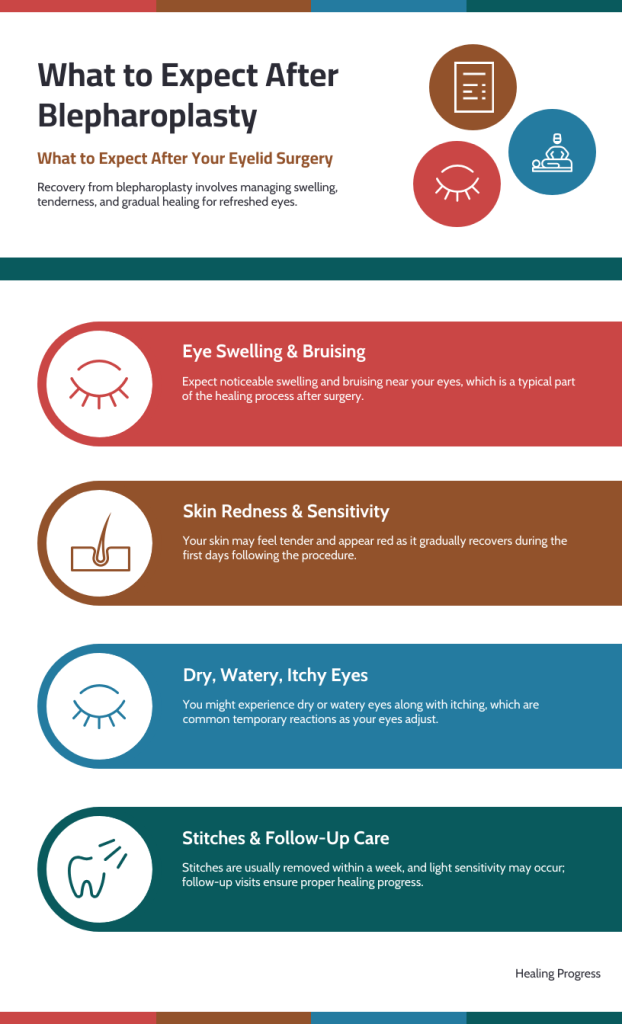
- What to Expect Richmond patients: After the procedure, you’ll likely have small bandages or steri-strips over the incisions, and your eyes may feel sore, tight, or swollen. You might experience mild discomfort, but significant pain is rare. Your vision may be blurry due to swelling, ointments, or temporary dryness, and you’ll be advised to rest with your head elevated.
- Physical Sensations: Swelling, bruising, and mild discomfort around the eyes are common. Your eyelids may feel tight or heavy, and you might notice increased tear production or dry eyes. Some patients describe a “gritty” sensation.
- Activity Level: Rest is crucial. Avoid strenuous activities, bending over, or anything that increases blood flow to the head, as this can worsen swelling. You’ll need to avoid reading, screen time, or bright lights to prevent eye strain.
- Tips:
- Arrange for someone to drive you home and assist with daily tasks for the first day or two.
- Sleep with your head elevated on 2–3 pillows to reduce swelling.
- Use prescribed antibiotic ointments or eye drops to prevent infection and keep incisions moist.
- Apply cold compresses (as directed by your surgeon) to minimize swelling and bruising.
First Week (Days 4–7)
- What to Expect: Swelling and bruising typically peak around days 2–4 and then begin to subside. Stitches (if not dissolvable) are usually removed 5–7 days post-surgery during a follow-up appointment. You’ll start to feel more comfortable, though your eyes may still look puffy or discolored.
- Physical Sensations: Residual swelling and bruising may make your eyes appear uneven temporarily. Dryness, itchiness, or sensitivity to light are common. Some patients experience mild tearing or a sensation of “something in the eye” as incisions heal.
- Activity Level: Light activities like walking are encouraged to promote circulation, but avoid heavy lifting, exercise, or activities that strain your eyes (e.g., prolonged reading or screen time). Most patients can return to non-physical work (e.g., desk jobs) within 5–10 days, depending on comfort and appearance.
- Tips:
- Protect your eyes from sun, wind, or dust by wearing dark sunglasses when outdoors.
- Avoid rubbing your eyes or touching the incision sites to prevent irritation or infection.
- Stay hydrated and use artificial tears if recommended to combat dryness.
Weeks 2–4
- What to Expect: By this stage, most swelling and bruising should significantly decrease, and you’ll start to see the refreshed appearance of your eyes. Incision lines (typically along the natural crease of the upper eyelid or just below the lower lash line) will begin to fade but may still be pink or slightly raised. You’ll likely feel more confident resuming social activities.
- Physical Sensations: Any residual discomfort should be minimal, though some itchiness or tightness may persist as scars heal. Sensitivity to light or dryness may continue but typically improves.
- Activity Level: You can gradually resume normal activities, including light exercise (e.g., walking or yoga) around 2–3 weeks, if cleared by your surgeon. Avoid high-impact workouts, swimming, or activities that risk eye irritation (e.g., dusty environments) until at least 4 weeks.
- Tips:
- Continue using sunglasses and sunscreen to protect healing skin from UV exposure, which can darken scars.
- Be gentle when applying skincare or makeup (if cleared by your surgeon, usually after 10–14 days).
- Attend follow-up appointments to ensure proper healing.
Weeks 4–8
- What to Expect: Most patients feel fully recovered by this point, with minimal to no swelling and scars fading into thin, less noticeable lines. Your eyes will look more open, youthful, and rested, and you’ll likely feel comfortable with your results in social settings.
- Physical Sensations: Any lingering dryness or sensitivity should resolve, though some patients experience mild, occasional discomfort. Scars continue to mature and soften.
- Activity Level: You’re typically cleared for all activities, including strenuous exercise, swimming, and contact lens use (if approved, usually after 4–6 weeks). Makeup application around the eyes is generally safe by 4 weeks, but confirm with your surgeon.
- Tips:
- Use silicone-based scar gels or sheets (if recommended) to improve scar appearance.
- Maintain a gentle skincare routine to support delicate eyelid skin.
- Monitor for any unusual changes, such as persistent redness or asymmetry, and consult your surgeon if needed.
Months 3–6 and Beyond
- What to Expect: By 3–6 months, your results should be fully settled, with scars blending into the natural contours of your eyelids. The refreshed, youthful appearance of your eyes will be evident, and most patients feel confident in their new look. Long-term results can last for years, though natural aging will continue.
- Physical Sensations: Your eyelids should feel normal, with no residual discomfort or sensitivity. Scars are typically faint and barely noticeable.
- Activity Level: No restrictions apply, and you can enjoy all activities, including sports, makeup, and skincare routines.
- Tips:
- Continue protecting your skin with sunscreen to maintain results and prevent premature aging.
- Schedule periodic check-ins with your surgeon to monitor long-term outcomes.
- Celebrate your rejuvenated appearance and newfound confidence!
Emotional Aspects of RecoveryRecovery from blepharoplasty involves more than just physical healing—it’s an emotional journey, too.
Here’s what you might experience:
- Early Recovery (First 1–2 Weeks): Swelling and bruising can make you feel self-conscious, especially if you’re not used to seeing yourself with temporary puffiness or discoloration. Some patients feel frustrated by activity restrictions or the inability to wear makeup.
- Mid-Recovery (Weeks 2–4): As swelling subsides and your results become visible, you may feel a mix of excitement and impatience. It’s common to scrutinize your appearance closely, so remind yourself that full results take time.
- Long-Term (3+ Months): Most patients report a boost in self-esteem, feeling more refreshed and confident in their appearance. If you have concerns about your results or emotional adjustment, don’t hesitate to discuss them with your surgeon or a counselor.
Tip: Connecting with others who’ve had blepharoplasty, whether through online forums or support groups, can provide reassurance and perspective during recovery.
Tips for a Smooth RecoveryTo optimize healing and achieve the best possible outcome, follow these practical tips:
- Follow Dr. DeConti’s Instructions: Adhere to post-op guidelines on medications, eye drops, ointments, and activity restrictions to ensure proper healing.
- Prepare Your Recovery Space: Before surgery, set up a comfortable area with pillows, cold compresses, artificial tears, and entertainment that doesn’t strain your eyes (e.g., audiobooks or podcasts).
- Manage Swelling and Bruising: Use cold compresses (10–15 minutes at a time) during the first 48–72 hours, and keep your head elevated to reduce swelling.
- Protect Your Eyes: Avoid irritants like smoke, dust, or wind, and wear wraparound sunglasses when outdoors. Limit screen time to prevent eye strain.
- Eat a Healthy Diet: Foods rich in vitamins A and C, protein, and hydration support tissue repair and reduce inflammation.
- Avoid Smoking and Alcohol: These can delay healing and increase swelling. Follow your surgeon’s advice on when it’s safe to resume, if applicable.
- Be Patient with Results: Scars and swelling take time to resolve, and final results may not be fully visible for 3–6 months.
Potential Challenges and How to Handle Them
While blepharoplasty recovery is typically straightforward, you may encounter:
- Swelling or Asymmetry: Uneven swelling can make one eye appear different from the other temporarily. This usually resolves within 2–4 weeks. If asymmetry persists, consult your surgeon.
- Dry Eyes or Irritation: Dryness is common and can be managed with prescribed or over-the-counter artificial tears. Persistent dryness should be discussed with your surgeon.
- Scar Visibility: Incisions are strategically placed to be discreet, but scars may be pink or raised initially. Use recommended scar treatments and avoid sun exposure to minimize visibility.
- Vision Changes: Temporary blurriness or light sensitivity is normal, but persistent vision issues should be reported to your surgeon immediately.
- Emotional Adjustments: If you’re struggling with the recovery process or your new appearance, seek support from loved ones or a professional.
Potential Complications to Watch For
Though rare, complications can occur. Contact your surgeon immediately if you experience:
- Severe pain or swelling that worsens after a few days.
- Signs of infection (e.g., redness, warmth, or discharge at incision sites).
- Significant vision changes or difficulty closing your eyes fully.
- Excessive bruising or bleeding that doesn’t improve.
Final Thoughts

FAQ
Yes, as with any surgical procedure, blepharoplasty will result in some scarring. However, the scars from eyelid surgery are minimal and well-concealed within the natural folds and creases of the eyelids.
Here is what you need to know about scarring after blepharoplasty:
Location of Scars:
- Upper Eyelid Blepharoplasty:
- The incision for upper eyelid surgery is typically made within the natural crease of the upper eyelid. This placement helps to conceal the scar when the eyes are open.
- Lower Eyelid Blepharoplasty:
- For lower eyelid surgery, the incision can be made just below the lower lash line (subciliary incision) or inside the lower eyelid (transconjunctival incision). The latter approach leaves no visible external scar.
Scar Healing and Appearance:
- Initial Appearance: Immediately after surgery, scars may appear red or pink and slightly raised. This is a normal part of the healing process.
- Scar Maturation: Over the next few weeks to months, the scars will gradually flatten, lighten, and become less noticeable. This process can take up to a year or more for the scars to fully mature.
- Final Appearance: Once fully healed, the scars are typically fine lines that blend in well with the surrounding skin, making them hard to notice.
Factors Affecting Scar Healing:
- Skin Type: Some individuals may scar more easily than others due to their skin type and genetic factors.
- Postoperative Care: Following your surgeon’s postoperative care instructions, such as keeping the incision sites clean, avoiding sun exposure, and not applying makeup too soon, can promote better healing.
- Sun Protection: Protecting the scars from sun exposure by wearing sunglasses and using sunscreen can prevent them from becoming darker and more noticeable.
- Scar Treatments: Your surgeon may recommend scar treatment options, such as silicone gel sheets, topical scar creams, or laser treatments, to help minimize the appearance of scars.
Tips for Minimizing Scarring:
- Follow Instructions: Adhere strictly to your surgeon’s postoperative care instructions.
- Avoid Smoking: Smoking can impair healing and increase the risk of more noticeable scarring.
- Hydrate and Nourish: Keep the skin well-hydrated and nourish your body with a healthy diet to support the healing process.
- Be Patient: Scar healing takes time. Be patient and allow your body to go through its natural healing process.
The cost of a blepharoplasty (eyelid surgery) can vary widely depending on several factors, including the geographic location, the surgeon’s experience and reputation, the specifics of the procedure, and the facility where the surgery is performed.
General guidelines on the costs:
- The average upper blepharoplasty cost in the U.S. ranges from $4,000 to $6,000.
- The average lower blepharoplasty cost in the U.S. ranges from $5,000 to $7000.
- Combining upper eyelid blepharoplasty and a lower blepharoplasty procedures can cost between $10,000 and $12,000.
Double eyelid surgery, also known as Asian blepharoplasty for Asian eyes, is a cosmetic procedure that creates a defined crease in the upper eyelid, resulting in a “double eyelid” appearance. This surgery is particularly popular among individuals of East Asian descent, as many people in this demographic naturally have a single Asian eyelid without a distinct crease.
You can typically return to work 7 to 10 days after a blepharoplasty, depending on the nature of your job and how quickly you heal.
Here is what to consider when deciding when to go back to work:
Factors That Affect Your Return to Work:
- Swelling and Bruising: These are usually the most noticeable side effects in the first week. By day 7, swelling and bruising begin to subside, though you may still have some mild puffiness or discoloration. If your work involves minimal physical activity, you might feel comfortable returning at this point.
- Physical Demands: If your job involves strenuous activity, lifting, or bending, you may need more time (around 2 weeks) before resuming those tasks, as they can increase swelling or affect healing.
- Vision and Eye Comfort: Some patients experience mild blurry vision or eye dryness immediately after the procedure. If your job requires extensive reading, screen time, or detailed visual work, you may want to wait until these symptoms have improved, typically within the first week.
- Comfort Level: While most bruising and swelling are reduced within the first 1 to 2 weeks, some patients prefer to wait until they feel fully comfortable with their appearance, especially for public-facing jobs.
Makeup and Cover-Up:
- After about 7 to 10 days, you can usually apply makeup to cover any residual bruising or redness, which may make you feel more comfortable returning to work.
Like any surgical procedure, blepharoplasty (eyelid surgery) carries some risks and potential complications. While most patients undergo the procedure without major issues, it’s important to be aware of the possible risks, which can include both short-term and long-term effects.
Common Risks and Complications
- Swelling and Bruising: Swelling and bruising around the eyes are common and typically subside within 1-2 weeks but may last longer for some patients.
- Dry Eyes: Some patients experience dry eyes, irritation, or sensitivity to light after surgery. This is usually temporary and can be managed with lubricating eye drops.
- Scarring: While blepharoplasty incisions are usually well-hidden in the natural folds of the eyelids, some patients may develop noticeable scars. Scarring typically fades over time, but this can vary based on individual healing.
- Infection: As with any surgery, there is a risk of infection. Signs of infection include increased redness, swelling, warmth, or discharge from the incision sites.
- Bleeding: Although rare, excessive bleeding can occur during or after surgery. This risk is higher for patients taking blood-thinning medications or supplements.
Less Common but Serious Complications
- Difficulty Closing the Eyes: In some cases, too much skin is removed, making it difficult to fully close the eyes. This can lead to dry eyes or other complications and may require corrective surgery.
- Ectropion: This is a condition where the lower eyelid pulls away from the eye, leading to irritation and potential damage to the eye. It may require additional surgery to correct.
- Vision Changes: Temporary blurred or double vision is relatively common in the early recovery period, but it usually resolves. In rare cases, vision changes may persist.
- Asymmetry: After surgery, some patients may notice unevenness between the two eyelids in terms of shape or size. This could require revision surgery.
- Blindness: While extremely rare, there is a small risk of blindness due to bleeding behind the eye (retrobulbar hemorrhage) that can put pressure on the optic nerve.
- Skin Discoloration: Some patients may experience long-lasting or permanent changes in skin pigmentation around the eyes.
- Sensitivity to Sunlight and Wind: The eyes can be more sensitive to sunlight and wind after surgery, but this generally resolves over time.
- Eye Muscle Injury: In rare cases, the muscles controlling eye movement can be damaged during surgery, leading to temporary or permanent issues with eye movement or alignment.
You will begin to see the results of your blepharoplasty (eyelid surgery) within a few weeks, but the final results typically become more apparent after 2 to 3 months.
Here is a timeline of what to expect:
First Few Days to a Week
- Swelling and Bruising: Immediately after surgery, you will have significant swelling and bruising around the eyes, which can make it difficult to appreciate the initial results.
- Blurry Vision: Temporary blurred vision and light sensitivity may occur due to the swelling or ointments applied during surgery.
1 to 2 Weeks
- Initial Improvements: After the first week, much of the swelling and bruising will subside, and you’ll begin to see the shape and contour of your eyelids more clearly.
- Suture Removal: If non-dissolvable stitches were used, they will likely be removed after 5 to 7 days, which may enhance your comfort and appearance.
- Returning to Normal Activities: You’ll likely be able to return to work and most social activities within 1 to 2 weeks, though some residual swelling or bruising might still be present.
3 to 4 Weeks
- Further Improvement: By this time, most of the swelling and bruising should be gone, and your eyelids will look much smoother, more defined, and refreshed.
- Subtle Healing: There may still be some residual puffiness or tightness, but it will continue to improve gradually.
2 to 3 Months
- Final Results: At this point, all swelling should have resolved, and the final shape and contour of your eyelids will be visible. Scars, if any, will begin to fade and become less noticeable over time.
Long-Term Results
- The results of blepharoplasty are generally long-lasting. For the upper eyelids, the effects can last 5 to 7 years or even longer. Lower eyelid surgery rarely needs to be repeated.
- Over time, the natural aging process will continue, and some changes in your eyelids may occur, but the improvements from surgery will typically be noticeable for many years.
The key to achieving the best results is to follow Dr. DeConti’s personal post-operative care instructions and attend follow-up appointments to monitor your healing.
The results of a blepharoplasty (eyelid surgery) are generally long-lasting, but how long they last can depend on several factors, including the area treated (upper or lower eyelids), your skin type, genetics, and the natural aging process.
Upper Eyelid Blepharoplasty
- The results of upper eyelid surgery typically last 5 to 7 years or longer.
- Over time, the skin around the eyes will continue to age, and some patients may eventually develop new sagging or drooping of the upper eyelids. In these cases, a touch-up surgery may be needed, but most people enjoy many years of improvement before considering another procedure.
Lower Eyelid Blepharoplasty
- Lower eyelid surgery results are often considered permanent. The procedure removes or repositions fat under the eyes to reduce puffiness or bags, and it’s rare for these issues to return after surgery.
- While the natural aging process may still affect the area around your eyes (e.g., skin thinning or the development of fine lines), the changes made during lower eyelid surgery usually last for many years, and the surgery rarely needs to be repeated.
Factors That Influence Longevity
- Aging: As you age, the skin around your eyes will continue to lose elasticity, which can eventually affect the results of the surgery.
- Lifestyle: Factors such as sun exposure, smoking, and diet can impact how quickly your skin ages, potentially influencing how long the results last.
- Genetics: Your genetic predisposition to aging, including how quickly your skin loosens or develops fat deposits, plays a role in how long your blepharoplasty results will last.
- Skin Care: Proper skin care, such as using sunscreen and anti-aging products, can help extend the life of your results by protecting your skin from further damage.
Maintenance
- Some people choose to undergo non-surgical treatments like Botox, fillers, or laser therapy in the years following blepharoplasty to maintain the rejuvenated appearance.
- If drooping or sagging occurs again in the upper eyelids after several years, a minor revision surgery may be considered.
In summary, the results of blepharoplasty are long-lasting, especially for the lower eyelids, with most people enjoying years of improvement before any signs of aging reappear.
Yes, there are non-surgical blepharoplasty options available for individuals who want to improve the appearance of their eyelids without undergoing surgery. These treatments focus on tightening the skin, reducing wrinkles, and improving the overall contour of the eyelids.
Here are common non-surgical alternatives:
1. Plasma Pen (Plasma Fibroblast)
- The plasma pen is a device that creates a small electrical arc to stimulate skin tightening and collagen production. It can help reduce excess skin and wrinkles on the eyelids, creating a lifting effect.
- It’s most effective for mild to moderate sagging and skin laxity.
2. Radiofrequency (RF) Skin Tightening
- Radiofrequency energy is used to heat the deeper layers of the skin, stimulating collagen production and tightening the skin around the eyes.
- Devices like Thermage and Pellevé are commonly used for non-surgical skin tightening, including for the upper and lower eyelids.
3. Ultrasound (Ultherapy)
- Ultherapy uses focused ultrasound energy to lift and tighten the skin by stimulating collagen production. It’s often used for lifting sagging skin around the eyes and can provide a mild lifting effect similar to a surgical blepharoplasty but without the downtime.
4. Injectable Fillers
- Fillers, such as hyaluronic acid (e.g., Restylane, Juvéderm), can be injected into the under-eye area to fill in hollowing (tear troughs) and reduce the appearance of dark circles or puffiness.
- While this doesn’t tighten the skin, it can make the area appear smoother and rejuvenated.
5. Botox (Botulinum Toxin)
- Botox can be injected around the eyes to reduce the appearance of crow’s feet and smooth out fine lines. Although it doesn’t address sagging or excess skin, it can give a more youthful appearance by relaxing the muscles that cause wrinkles.
6. Laser Skin Resurfacing
- Laser treatments, such as CO2 or Erbium lasers, can improve skin texture and tighten the skin around the eyes. Laser resurfacing stimulates collagen production and can reduce wrinkles, fine lines, and mild sagging.
- This procedure can be effective for reducing the appearance of under-eye bags and tightening loose skin.
7. Microneedling with Radiofrequency
- This treatment combines traditional microneedling with radiofrequency energy to promote collagen production and skin tightening. It can improve the texture and firmness of the skin around the eyes.
Benefits and Limitations:
- Pros: Non-surgical options have minimal downtime, are less invasive, and are less costly compared to surgery. They are suitable for patients with mild to moderate skin laxity or early signs of aging.
- Cons: The results are typically significantly less dramatic and may not last as long as surgical blepharoplasty. Multiple sessions with increased costs are often needed to achieve optimal results.
These treatments are ideal for individuals who are not ready for surgery or those with mild concerns about sagging skin or wrinkles around the eyes. However, for more significant eyelid drooping or excess skin, surgical blepharoplasty is usually more effective.
Here’s how:
- Consult with Dr. DeConti a board-certified plastic surgeon who specializes in eyelid surgery. He will assess if your eyelid condition (e.g., ptosis or dermatochalasis) impairs vision.
- Document Symptoms: Report issues like obstructed vision, difficulty reading, or headaches from straining to see. These functional complaints are key to justifying coverage.
- Undergo Visual Field Testing: Most insurers require a visual field test to confirm that excess eyelid skin significantly impairs your peripheral vision (typically a 30% or more reduction). Your doctor will perform this test and document results.
- Obtain Pre-Authorization: Dr. DeConti will submit a pre-authorization request to your insurance, including:
- Visual field test results (with and without taping the eyelid to show improvement).
- Medical records detailing symptoms and functional impairment.
- Photos showing eyelid drooping or obstruction.
- A letter of medical necessity from Dr. DeConti.
- Check Insurance Policy: Review your insurance plan’s criteria for blepharoplasty coverage. Some plans have specific requirements, like a minimum degree of visual field loss (e.g., 12-15 degrees of obstruction). Contact your insurer to confirm.
- Consider Related Conditions: If blepharoplasty is needed due to trauma, infection, or other medical conditions (e.g., thyroid eye disease), highlight these in your claim, as they may strengthen your case.
- Appeal if Denied: If coverage is denied, appeal with your doctor’s help. Provide additional evidence, such as a second opinion or more detailed documentation.
Tips:
- Medicare and private insurers like Blue Cross Blue Shield often cover upper eyelid blepharoplasty if medically necessary but rarely cover lower eyelid procedures, which are usually cosmetic.
- Be prepared for insurers to scrutinize claims to ensure the procedure isn’t for aesthetic purposes.
- Work closely with Dr. DeConti’s billing team, as they’re experienced in navigating insurance requirements.
Always verify details with your insurance provider, as policies differ.
Does Dr. DeConti accept insurance for a medically necessary blepharoplasty?
Dr. Robert DeConti is highly regarded as a top plastic eye surgeon, particularly noted for his expertise in facial and eyelid surgery. He is a board-certified plastic surgeon with a significant amount of experience, having been in practice for over 30 years. His reputation is built on a combination of technical skill, attention to detail, and a compassionate approach to patient care.
Dr. DeConti has received numerous awards, including recognition for his bedside manner and patient care. His expertise in procedures like blepharoplasty (eyelid surgery) and facelifts has made him a sought-after surgeon, especially for complex or revision cases. He is also known for his work in cosmetic surgery of the face, breasts, and body, and has been featured on various media outlets discussing advancements in these areas.
Patients frequently praise Dr. DeConti for his meticulous technique and the natural-looking results he achieves, particularly in delicate areas like the eyes, where precision is crucial. This is why he is considered one of the best eye plastic surgeon. His practice in Richmond offers a comprehensive range of cosmetic procedures, and he has been recognized as a Top Doc best plastic surgeon in the region multiple times over the years.
So when researching an oculofacial plastic surgeon near me, reach out to DeConti Plastic Surgery at 804 673-8000. Dr. DeConti would be happy to meet with you and discuss a personalized appraoch to make your eyes more youthful.
DeConti Plastic Surgery
Blepharoplasty Specialist in Richmond, VA
Proudly serving patients from Henrico County, Chesterfield County, Midlothian, Short Pump, Glen Allen, Mechanicsville, Bon Air, Lakeside and all communities in Central Virginia.
7229 Forest Ave STE 101 Richmond, VA
804 673-8000