What is BIA-ALCL?
Breast Implant-Associated Anaplastic Large Cell Lymphoma, BIA ALCL lymphoma is a rare Non-Hodgkin T-cell lymphoma that is found in patients who have undergone breast augmentation or breast reconstruction with breast implants. It can occur with either saline or silicone gel-filled breast implants but is significantly more common with textured implants.
What causes BIA ALCL lymphoma?
The following are possible causes of BIA-ALCL:
- Bacteriologic contamination
- Long-term allergic inflammation
- Implant texturing
- Genetic factors
What are the symptoms of BIA-ALCL?
Breast Implant-Associated Anaplastic Large Cell Lymphoma (BIA-ALCL) is a rare type of non-Hodgkin lymphoma that can develop around breast implants.
The symptoms of BIA-ALCL can include:
Swelling or Fluid Accumulation: Persistent swelling or fluid buildup around the implant, often occurring years after the implant surgery.
Lumps or Masses: The presence of lumps in the breast or armpit area, which can sometimes be painful.
Pain: Persistent pain in the breast area that does not subside with usual treatments.
Asymmetry: Changes in breast shape or size, leading to noticeable asymmetry.
Rash or Skin Changes: Redness or a rash on the breast, although this is less common.
Capsular Contracture: Hardening of the breast due to the formation of fibrous tissue around the implant, which can also be associated with pain and discomfort.
If you experience any of these symptoms, especially if you have breast implants, it’s important to seek medical evaluation promptly. Early diagnosis and treatment are crucial for managing BIA ALCL disease effectively.
What are the risk factors for developing BIA-ALCL?
The risk factors for developing Breast Implant-Associated Anaplastic Large Cell Lymphoma (BIA-ALCL) are not entirely understood, but several factors have been identified that may increase the risk:
Type of Breast Implant:
- Textured Implants: The majority of BIA-ALCL breast implant cancers cases have been associated with textured breast implants. The rough surface of textured implants is believed to trigger a chronic inflammatory response, which can potentially lead to the development of ALCL lymphoma.
- Smooth Implants: There are fewer reported cases of BIA ALCL cancer with smooth implants, suggesting a significantly lower risk compared to textured implants.
Duration of Implant:
- BIA-ALCL typically develops many years after the initial implantation, often around 7-10 years post-surgery, although cases have been reported both earlier and later.
History of Breast Implants:
- Individuals who have had multiple breast implant surgeries or replacements may have an increased risk due to repeated exposure to implants and potential chronic inflammation.
Genetic Factors:
- While specific genetic predispositions have not been conclusively identified, it is possible that genetic factors could play a role in susceptibility to BIA-ALCL.
Immune System Factors:
- Conditions that affect the immune system or immune response might contribute to the development of BIA-ALCL, although this link is not well established.
Capsular Contracture:
- There is some evidence to suggest that individuals who develop severe capsular contracture (hardening and tightening of the fibrous capsule around the implant) may be at higher risk, as this condition can indicate a more pronounced inflammatory response.
What is the overall risk for developing BIA-ALCL?
BIA-ALCL is a rare condition. The estimated risk for individuals with breast implants ranges from 1 in 2,207 to 1 in 86,029, depending on various factors such as the type of implant and duration of implantation.
Where is BIA-ALCL found?
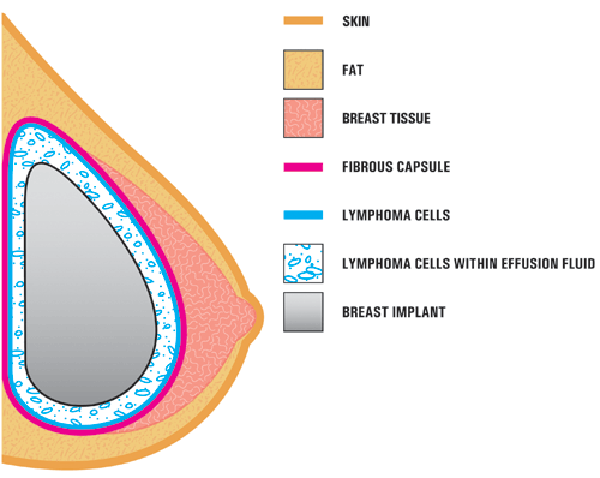
In most cases, BIA-ALCL is found in the scar tissue and fluid near the implant. It can spread throughout the body. When it is caught early, it is usually curable. BIA-ALCL is not a cancer of the breast tissue.
How fast does BIA ALCL spread?
The progression and spread of Breast Implant-Associated Anaplastic Large Cell Lymphoma (BIA-ALCL) can vary significantly from person to person.
Here are points regarding its spread:
Localized Disease: In many cases, BIA-ALCL is initially localized to the area surrounding the breast implant, particularly within the fibrous capsule that forms around the implant. This localized stage is often detected due to symptoms such as swelling or a lump.
Early Detection: If detected early, BIA-ALCL often remains localized and can be effectively treated with surgery to remove the implant and the surrounding capsule. This early intervention can prevent further spread.
Potential for Spread: If not diagnosed and treated promptly, BIA-ALCL has the potential to spread beyond the implant capsule to nearby lymph nodes and, in rare cases, to other parts of the body. The rate of spread can vary, and in some cases, the disease may remain indolent for a period before progressing.
Monitoring and Follow-Up: Regular monitoring and follow-up with healthcare providers are crucial for individuals with breast implants, especially if they experience any symptoms suggestive of BIA-ALCL. Early detection and treatment are key to preventing the spread of the disease.
While BIA-ALCL can be serious, it is generally considered treatable, especially when diagnosed early.
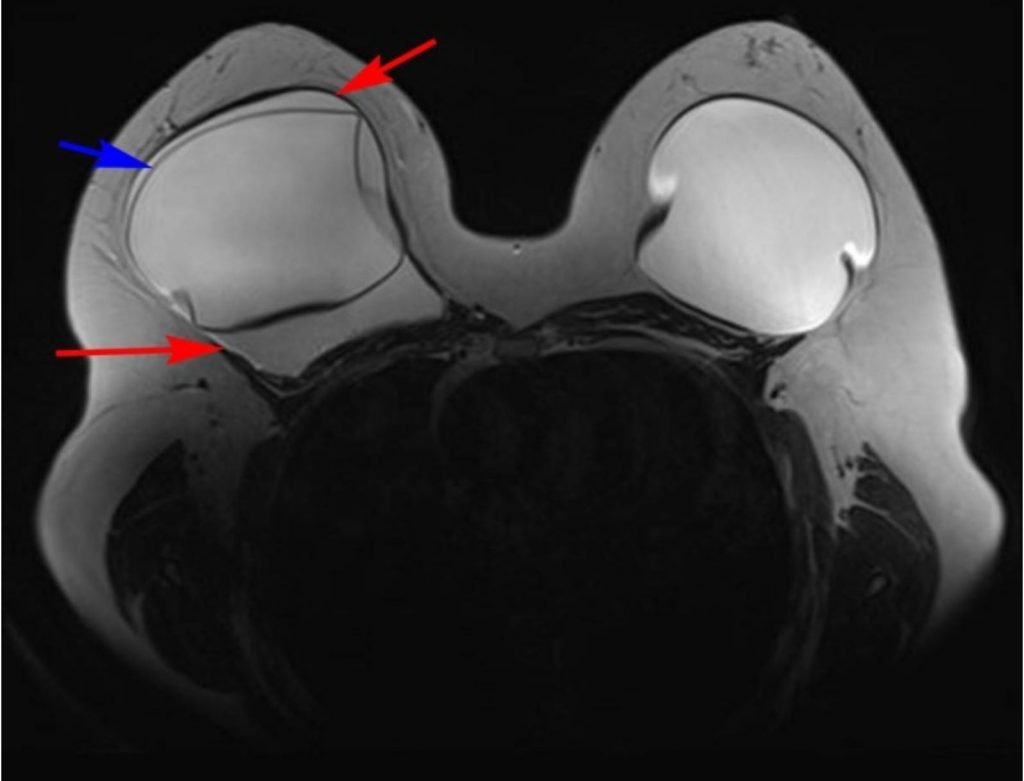
Testing for Breast Implant-Associated Anaplastic Large Cell Lymphoma (BIA-ALCL) involves several steps to confirm the diagnosis.
Here is the typical process for diagnosing BIA-ALCL:
Clinical Examination:
- A thorough physical examination of the breasts and surrounding areas, including checking for swelling, lumps, or asymmetry.
Imaging Studies:
- Ultrasound: An ultrasound can detect fluid collections (seromas) and masses around the implant.
- Magnetic Resonance Imaging (MRI): MRI can provide detailed images of the breast tissue, implant, and any surrounding abnormalities.
- Computed Tomography (CT) Scan: Sometimes used to evaluate the extent of disease and to check for lymph node involvement or metastasis.
Fluid Aspiration:
- If fluid accumulation (seroma) is detected around the implant, a fine-needle aspiration can be performed to collect the fluid. This fluid is then sent for cytological analysis to check for the presence of lymphoma cells.
Biopsy:
- If a mass or lump is detected, a biopsy may be performed. This can involve:
- Core Needle Biopsy: A larger needle is used to remove a core of tissue from the suspicious area.
- Excisional Biopsy: Surgical removal of the entire suspicious area or lump for analysis.
- If a mass or lump is detected, a biopsy may be performed. This can involve:
Pathological Examination:
- The collected fluid or tissue is examined under a microscope by a pathologist to look for characteristic features of BIA-ALCL, such as large, abnormal lymphoma cells.
- Immunohistochemistry tests are performed to detect specific markers associated with BIA-ALCL, such as CD30 and ALK-negative status.
Molecular Testing:
- Additional molecular tests may be conducted to further characterize the lymphoma cells and to rule out other types of lymphomas.
Staging:
- If BIA-ALCL is confirmed, additional tests such as PET-CT scans may be done to determine the stage of the disease, which helps guide treatment decisions.
The treatment of Breast Implant-Associated Anaplastic Large Cell Lymphoma (BIA-ALCL) typically involves a combination of surgical and medical approaches, depending on the stage and extent of the disease.
Here are the primary treatment options:
Surgical Removal:
- Explantation: Removal of the breast implant and the surrounding fibrous capsule (complete capsulectomy) is often the first step. This procedure is crucial for removing the localized tumor.
- Lymph Node Removal: If the lymphoma has spread to nearby lymph nodes, these may also be surgically removed.
Radiation Therapy:
- In some cases, radiation therapy may be used to target and destroy any remaining cancer cells after surgery, especially if there are concerns about residual disease.
Chemotherapy:
- If BIA-ALCL has spread beyond the localized area around the implant or is found in the lymph nodes, chemotherapy may be recommended. The specific regimen will depend on the extent of the disease and the patient’s overall health.
Targeted Therapy:
- Targeted therapies, such as brentuximab vedotin (an antibody-drug conjugate), may be used in certain cases. This approach targets specific proteins on the surface of cancer cells.
Regular Monitoring:
- After treatment, regular follow-up and monitoring are essential to detect any recurrence or progression of the disease. This may involve physical exams, imaging studies, and laboratory tests.
Supportive Care:
- Managing symptoms and maintaining overall health and well-being during and after treatment is crucial. This may include pain management, nutritional support, and psychological support.
The choice of treatment depends on various factors, including the stage of BIA-ALCL, the patient’s overall health, and the presence of any metastasis.
The survival rate for Breast Implant-Associated Anaplastic Large Cell Lymphoma (BIA-ALCL) is generally favorable, especially when the disease is detected early and treated appropriately.
The key points about the BIA-ALCL survival rate:
Early-Stage Disease: When BIA-ALCL is diagnosed at an early stage and is localized to the area around the implant, the prognosis is excellent. Most patients who undergo surgical removal of the implant and the surrounding capsule (complete capsulectomy) have a high survival rate. Studies have reported 5-year survival rates of over 90% for early-stage, localized BIA-ALCL.
Advanced Disease: For patients with more advanced disease, where the lymphoma has spread to lymph nodes or other parts of the body, the prognosis can be less favorable. However, with appropriate treatment, including surgery, chemotherapy, and sometimes radiation or targeted therapy, many patients still achieve remission. The 5-year survival rate for advanced cases can vary but is generally lower than for localized disease.
Overall Prognosis: Overall, the prognosis for BIA-ALCL is good compared to other types of lymphomas, particularly when it is caught early and treated promptly. Regular follow-up and monitoring are essential for early detection and successful treatment.
There is no definitive evidence to suggest that the size of breast implants, giant breast implants or massive breast implants, directly influences the risk of developing Breast Implant-Associated Anaplastic Large Cell Lymphoma (BIA-ALCL). The primary risk factors identified are more closely related to the surface texture of the implants (textured vs. smooth) rather than their size.
If you have developed swelling or a mass in one of your breasts after breast augmentation or breast reconstruction, or feel you are having symptoms of BIA-ALCL, please do not hesitate to contact Dr. DeConti to schedule a consultation to discuss your symptoms and options. Call DeConti Plastic Surgery at 804 673-8000.