What is breast implant illness?
Breast Implant Illness (BII) is a group of symptoms in women who have undergone breast augmentation. These women feel the symptoms are related to the toxic effects of breast implants.

What are the symptoms of breast implant illness?
The symptoms that have been described with Breast Implant Illness include:
- Acute or chronic fatigue or tiredness
- Brain fog
- Inability to concentrate
- Memory loss
- Muscle aches, pains or weakness
- Joint pain or soreness
- Hair loss
- Dry skin, eyes or mouth
- Weight gain or loss
- Easy bruising
- Slow-healing cuts and wounds
- Temperature intolerance
- Low libido
- Ringing in the ears
- Heart palpitations
- Shortness of breath
- Night sweats
- Skin rashes
- Metallic taste in the mouth
- Inability to sleep
- Swollen, tender lymph nodes
- Tingling or numbness in the hands, arms, legs or feet
- Cold intolerance
- Foul body odor
- Dizziness
- Fevers
- Visual changes
- Sensitivity to the sun
- Infections
- Nails cracking or splitting
- Anxiety or panic attacks
- Stomach pain
- Increased allergies
- Headaches or migraines
- Depression
What causes breast implant illness?
The specific cause of Breast Implant Illness has not been determined.
However, several theories have been postulated:
- An increased inflammatory reaction to a foreign object i.e silicone breast implant or implant shell
- A specific reaction to a specific component of the breast implant
- A response to a subacute infection or Biofilm which forms around the implant
How do you diagnose breast implant illness?
Unfortunately, there are no lab tests or radiographic studies that will specifically diagnose BII. Breast Implant Illness is considered a diagnosis of exclusion; meaning all other possible causes of the symptoms are excluded before considering this diagnosis.
The following are tests that may be done to diagnose BII:
- Cell Blood Count
- Complete Metabolic Count
- Ultrasound
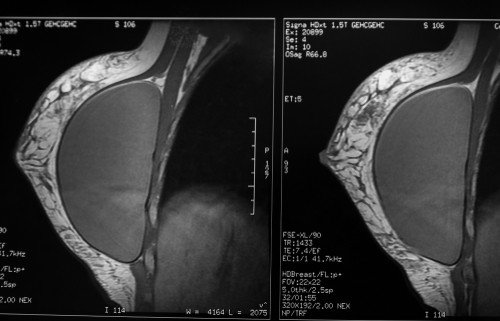
- MRI
- Biopsy if a mass or enlarged lymph nodes are present
- Consultation with a rheumatologist
Tests on Implant and capsule
The implants and capsules will be photographed and sent to pathology for macroscopic and microscopic evaluation. The tissue may be cultured for infection. Tests for BIA-ALCL, such as CD30IHC, will be conducted if indicated. Unfortunately, there are no specific tests that can be performed on the implants or capsules to identify the cause of breast implant illness.
Breast Implant Illness MRI
What is the treatment for breast implant illness?
Explantation (Removal of Implants):
- The most common and effective treatment for BII is the removal of the breast implants, often along with the surrounding scar tissue (capsulectomy) also known as an en bloc removal. Many women report significant improvement or complete resolution of symptoms after explantation.
Detoxification:
- Some patients pursue detoxification protocols to help the body clear any potential toxins. This may include dietary changes, supplements, and other methods, though scientific evidence supporting these specific interventions is limited.
Lifestyle and Supportive Care:
- Anti-inflammatory diets, regular exercise, stress management techniques, and other lifestyle changes might be recommended to help manage symptoms.
Medical Management:
- If specific symptoms are prominent (e.g., autoimmune symptoms), targeted medical therapies such as medications for pain or autoimmune conditions might be used.
Counseling and Mental Health Support:
- Given the psychological impact of both having breast implants and the symptoms associated with BII, mental health support, including therapy or counseling, might be beneficial.
Monitoring and Follow-Up:
- Continuous monitoring of symptoms and regular follow-ups with healthcare providers can be crucial to managing and understanding the progression of symptoms.
It’s essential for individuals experiencing symptoms to consult with a healthcare professional who is knowledgeable about BII. Treatment and breast implant removal near me should be personalized based on the individual’s symptoms and overall health condition.
If you’re considering explantation, it’s important to consult with explant surgeons, like Dr. DeConti, who are experienced in this procedure, and one who understands the concerns related to BII.
What is En Bloc breast implant removal?
En Bloc resection means the implant and scar tissue around the implant, i.e. the capsule, are removed “en bloc” or as one piece. This means the capsule is dissected from the surrounding breast tissue with the implant inside. The capsule is never opened to prevent any of its contents to be exposed to the body. Thus, this removes the capsule, the implant and any toxins which have been leaked by the implant from the body.
Is everybody a good candidate for an en bloc breast implant removal?
Despite what several surgeons have stated, not every patient is a good candidate for the procedure.
En bloc capsulectomy may not be possible if:
- The capsule is thin and delicate to remove: The capsule is too thin and delicate to remove in one piece. In this case, as much of the capsule will be removed with the implant.
- Breast tissue or skin is very thin: For patients with very thin skin, removing the capsule could risk thinning of the skin and result in tissue necrosis (tissue death) from lack of blood supply. If this is under the nipple, the nipple will die and the patient is significantly disfigured. Thus, leaving the capsule intact is a much safer option.
- The capsule is adhering to vital tissues: For example, if scar tissue is tightly attached to the rib cage, removing the tissue could risk injuring the chest wall or rarely the lungs.
Drains may or may not be needed depending on the extent of the surgery and the size of the cavity after the en bloc breast implant removal has been performed. The incision for the en bloc removal is usually significantly longer than the original implant surgery and is located in the inframammary crease.
Yes, you will have a scar after an en bloc removal of breast implants. The size and location of the scar will depend on several factors, including the size of your implants, the method of insertion used during your original surgery, and your body’s healing process.
Factors Influencing Scarring:
- Incision Location: The scar will typically be located where the original incision was made. Common incision sites include the crease under the breast (inframammary), around the areola, or in the armpit.
- Surgical Technique: Surgeons aim to minimize scarring, but the en bloc technique requires a larger incision to remove both the implant and the surrounding scar tissue (capsule) intact.
- Healing Process: Your individual healing process, including how your body forms scars, will influence the final appearance. Some people may develop thicker, raised scars (hypertrophic or keloid scars), while others may heal with a fine line scar.
The breasts will lose their volume based on the size of the original breast implant. If there is not a lot of breast tissue left, the skin may ripple, pucker, sag or become adherent to the chest because of the loss of the volume.
After breast implant removal, especially if you choose not to replace them with new implants, there are several options to address the potential loss of breast volume and shape.
Here are common methods:
1. Fat Grafting (Fat Transfer):
- Procedure: Fat is harvested from another area of your body, such as the abdomen or thighs, through liposuction. This fat is then purified and injected into the breasts to restore volume.
- Pros: It uses your own tissue, providing a natural feel. It can also contour the donor area, improving overall body shape.
- Cons: Not all of the transferred fat may survive, and multiple sessions may be required to achieve the desired volume.
2. Breast Lift (Mastopexy):
- Procedure: A breast lift involves removing excess skin and tightening the surrounding tissue to reshape and support the new breast contour.
- Pros: This can improve breast shape, making them look fuller and more youthful. It is often done simultaneously with explantation.
- Cons: A breast lift does not add volume but improves the shape and position of the breasts.
3. Breast Reconstructive Surgery:
- Procedure: Some women opt for reconstructive surgery, which may involve using autologous tissue (flaps) from other parts of the body, such as the abdomen (DIEP flap) or back (latissimus dorsi flap), to recreate the breast shape.
- Pros: It can provide a natural look and feel without the use of implants.
- Cons: This is a more complex surgery with a longer recovery time and potential for additional scars.
4. External Options (Non-Surgical):
- Specialized Bras: Wearing padded bras or bras with inserts can help enhance the appearance of breast volume without surgery.
- Breast Forms: Silicone breast forms or prostheses can be worn inside a bra for a fuller look.
5. Hormonal or Non-Surgical Treatments:
- While there are no scientifically proven non-surgical methods to increase breast size significantly, some people explore natural supplements or hormonal treatments. However, these should be approached with caution and under medical supervision.
6. Exercise and Muscle Building:
- Focus on Chest Exercises: Strengthening the pectoral muscles through exercises like push-ups, chest presses, and chest flies can provide some lift and firmness to the chest area, though it won’t significantly increase breast size.
The most commonly recommended and effective treatment for Breast Implant Illness (BII) is the removal of the breast implants. This is often done through a procedure called explantation, which may include an en bloc capsulectomy or an en bloc explant.
Here is a detailed look at this and other treatment options:
1. Explantation with En Bloc Capsulectomy
- Procedure: This involves removing the breast implants along with the surrounding scar tissue (capsule) in one piece. The idea is to remove any potential irritants or contaminants in the capsule that might be contributing to symptoms.
- Effectiveness: Many women report significant improvement or complete resolution of their BII symptoms after explantation, especially when done with en bloc capsulectomy.
- Considerations: It is crucial to find a surgeon experienced in this procedure, as it requires skill to remove the entire capsule without rupturing the implant.
2. Complete Capsulectomy (Without En Bloc)
- Procedure: If an en bloc removal isn’t possible, a complete capsulectomy can still be effective. This involves removing the capsule tissue in parts after taking out the implant.
- Effectiveness: This method is also effective for many women, though some prefer en bloc removal to ensure all tissue is removed in one piece.
Breast Implant Illness (BII) has been reported by women with various types of breast implants, but it is not exclusively associated with one specific type. Both silicone and saline implants have been linked to reports of BII.
Here is a breakdown of the types of implants and their association:
1. Silicone Gel Implants:
- Characteristics: These implants are filled with a silicone gel and are often preferred for their natural feel.
- Association with BII: Silicone implants are frequently mentioned in discussions about BII. Some women believe that silicone gel, especially if it leaks or bleeds through the implant shell, may trigger immune reactions or systemic symptoms. However, no definitive scientific link has been established.
2. Saline Implants:
- Characteristics: These implants are filled with sterile saltwater (saline). If they rupture, the body can absorb the saline, which is generally considered harmless.
- Association with BII: Although considered less likely to cause concerns compared to silicone, saline implants are still reported in BII cases. The concern here might relate to the shell material (which is typically silicone) or potential contamination within the implant.
3. Textured Implants:
- Characteristics: These implants have a rough surface designed to adhere better to the surrounding tissue, potentially reducing the risk of certain complications like capsular contracture.
- Association with BII: Textured implants, particularly certain models, have been associated with a rare cancer called Breast Implant-Associated Anaplastic Large Cell Lymphoma (BIA-ALCL). While BIA-ALCL is different from BII, the controversy around textured implants has heightened concerns about their overall safety.
4. Smooth Implants:
- Characteristics: Smooth implants have a soft, slippery surface and move freely within the breast pocket, which can give a more natural movement.
- Association with BII: These implants are also associated with reports of BII, similar to textured implants, although they are less likely to be linked with BIA-ALCL.
5. Polyurethane-Coated Implants:
- Characteristics: These implants are coated with a layer of polyurethane foam, intended to reduce the risk of capsular contracture.
- Association with BII: Although less common, these implants have also been implicated in reports of BII, with concerns that the degradation of the polyurethane coating could contribute to symptoms.
Key Points:
- No Single Type: BII has been reported in women with all types of implants, regardless of the fill material (silicone or saline) or surface texture (smooth or textured).
- Individual Susceptibility: Some theories suggest that individual immune responses or pre-existing conditions might make some women more susceptible to developing BII symptoms, regardless of the type of implant.
- Ongoing Research: BII is still being studied, and the exact causes and risk factors are not fully understood. Some medical professionals believe that BII could be related to the body’s immune response to the implant materials or the presence of biofilm (bacterial contamination) on the implant surface.
If you remove your breast implants, particularly through an en bloc capsulectomy (where the implants and surrounding scar tissue are removed in one piece), the current data suggests that there is a significant chance of improvement in your symptoms, though it varies from person to person.
Improvement Rates:
- 50-75% of Women Report Improvement: Studies and anecdotal reports indicate that between 50% to 75% of women experience an improvement in their symptoms after explantation. This improvement can range from partial to complete resolution of symptoms.
- No Guarantees: While many women do report feeling better after implant removal, there is no guarantee that all symptoms will improve or that they will improve completely. Some symptoms may persist, and in some cases, new symptoms could arise.
Factors Influencing Improvement:
- Extent of Capsulectomy: The completeness of the removal, particularly if done en bloc, may influence the degree of symptom improvement.
- Duration of Implantation: The length of time the implants have been in place might affect the recovery and symptom improvement post-explantation.
- Individual Health: Each person’s immune system and overall health condition play a significant role in how well they recover and how much their symptoms improve.
- Underlying Conditions: If there are other underlying health issues contributing to the symptoms, removing the implants alone may not fully address those symptoms.
Post-Explantation Recovery:
- Some women experience immediate relief, while others notice gradual improvement over weeks or months.
- It’s important to monitor your health and work with your healthcare provider during the recovery process to manage any persistent symptoms.
Dr. DeConti is an en bloc capsulectomy surgeon near me known as a caring and compassionate physician who has has been performing en bloc breast implant removal for patients desiring to have their breast implants removed. He has always felt en bloc removal allows the patient to return to “pre-augment anatomy” and not have the remaining capsule which can fill with fluid or cause pain or other problems. Dr. DeConti has been especially empathetic and compassionate to those who feel their implants have been causing symptoms consistent with Breast Implant Illness even before it acquired national support.
If you feel you are having symptoms of breast implant illness near me, please do not hesitate to contact Dr. DeConti to schedule a consultation to discuss your symptoms and options. Call DeConti Plastic Surgery at 804 673-8000.
Breast Implant Illness
What will my breasts look like after my breast implants are removed?
En Bloc Implant Removal