Deciding between breast augmentation alone or augmentation with a lift can be confusing. Many women assume that larger implants will simply “fill out” sagging breasts – but that’s not always true. In fact, choosing the wrong procedure can lead to unnatural results like the “double bubble” deformity or worsened ptosis over time. This clinical decision flowchart, based on the Regnault ptosis classification and nipple position relative to the inframammary fold (IMF), helps you understand the key factors plastic surgeons use to make this recommendation. Use this guide to prepare for your consultation, ask better questions, and ensure you choose the right procedure for your unique anatomy.
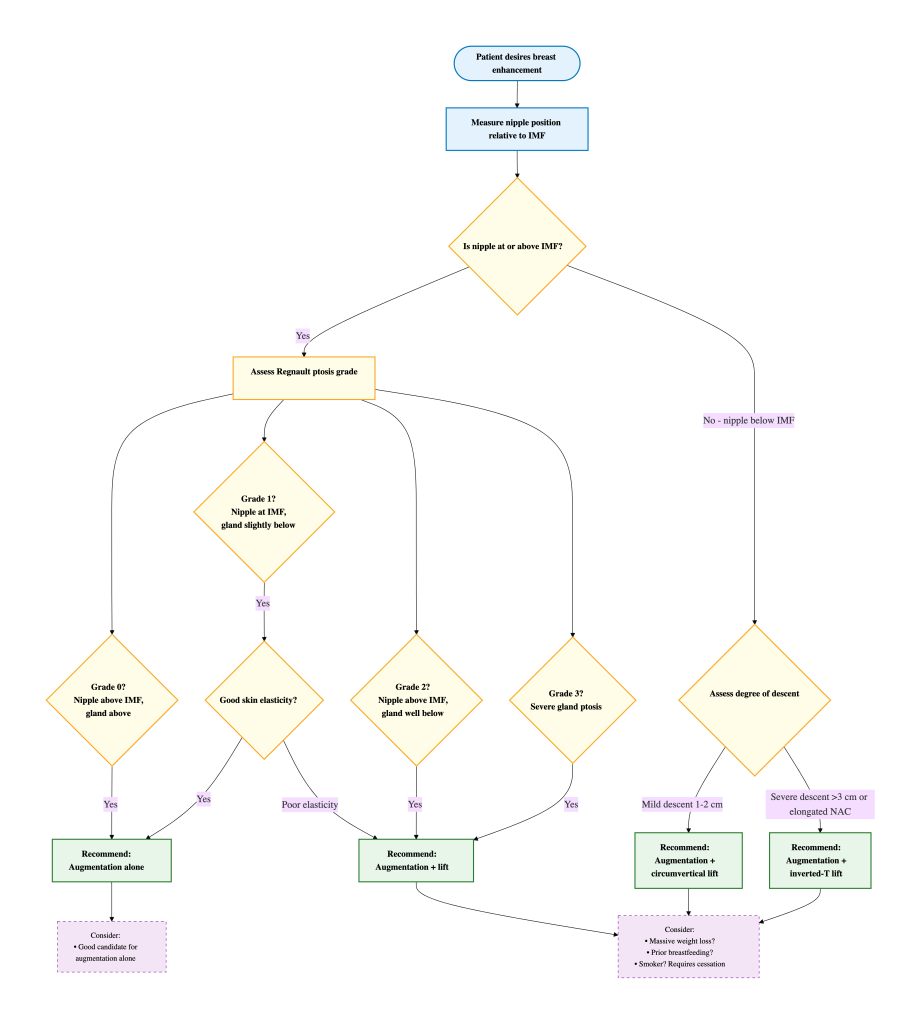
Figure 1: Decision algorithm for breast augmentation alone vs. augmentation with mastopexy
How to Use This Decision Chart
Step 1: Find your nipple position relative to your breast crease (IMF) – this is the most important factor.
Step 2: If your nipple is at or above the crease, check your ptosis grade (0, 1, 2, or 3).
Step 3: Consider your skin elasticity – stretch marks or multiple pregnancies may mean you need a lift.
Step 4: Bring this chart to your consultation to discuss your results with Dr. DeConti.
Summary Box 1 – Augmentation Alone
You may be a candidate for implants only if:
Nipple at or above IMF
Grade 0 or mild Grade 1 ptosis
Good skin elasticity
Summary Box 2 – Augmentation with Lift
You likely need a lift with your implants if:
Nipple BELOW IMF (any amount)
Grade 2 or 3 ptosis
Poor skin elasticity (stretch marks, multiple pregnancies, massive weight loss)
The Pencil Test!
FAQ
Can I get breast implants now and add a lift later?
Yes, you can. This is called a staged approach. However, there are important trade-offs to understand.
If you get implants alone now but actually need a lift, you may end up with a “double bubble” deformity or your nipples may appear to sit too low once the implants settle. Fixing this later requires a more complex surgery than if you had done both procedures together from the start.
Having both procedures at the same time means one surgery, one recovery, and one anesthesia event. Doing them separately means two surgeries, two recoveries, and higher total cost.
If you are unsure whether you need a lift, use the flowchart above and discuss your concerns with Dr. DeConti during your consultation. He can help you decide which approach is right for your anatomy and goals.
How long does recovery take for augmentation with a lift compared to augmentation alone?
Recovery time is similar for both procedures, but adding a lift does require a bit more healing.
With augmentation alone, most patients return to desk work within 5 to 10 days. With augmentation plus a lift, plan for 7 to 14 days before returning to work. The difference comes from the additional incisions and skin tightening involved in a lift.
For both procedures, you should avoid heavy lifting, strenuous exercise, and raising your arms above your head for 4 to 6 weeks. Full recovery – including scars maturing and implants settling – takes about 3 to 6 months.
Dr. DeConti will give you specific recovery instructions based on your exact procedure.
Will I have more visible scars if I add a lift?
Yes, a breast lift does add incisions beyond those used for augmentation alone.
With augmentation alone, incisions are typically hidden in the breast crease (inframammary), armpit (transaxillary), or around the areola (periareolar). Each scar is usually one to three inches long.
Adding a lift means additional incisions. For a circumvertical lift, you will have a scar around the areola and a vertical line down the lower breast. For an inverted-T lift (anchor scar), you will have a scar around the areola, a vertical line down the breast, and a horizontal scar along the breast crease.
The good news is that these scars typically fade to thin, pale lines over 12 to 18 months. Dr. DeConti uses meticulous techniques to minimize scarring. Most patients feel the trade-off – perkier, more youthful breasts – is well worth the scars.
Does insurance cover breast augmentation or breast lift?
Does insurance cover breast augmentation or breast lift?
Typically, no. Breast augmentation and breast lift are considered cosmetic procedures, so most insurance plans do not cover them.
There are a few exceptions:
Breast reconstruction after mastectomy for breast cancer is usually covered.
Significant breast asymmetry caused by a congenital condition may sometimes be covered.
Breast reduction (not augmentation) for medical reasons like back pain may be covered.
Dr. DeConti’s office can provide a quote for your procedure, and financing options like CareCredit are available. Call 804-673-8000 to discuss payment and financing during your consultation.
How do I know my ptosis grade? Can I measure it myself at home?
You can get a rough idea at home, but a surgeon’s examination is more accurate.
Here is a simple way to check your ptosis grade:
Stand in front of a mirror without a bra. Look at where your nipple sits in relation to your inframammary fold (the crease under your breast).
Grade 0 (no ptosis): Nipple is well above the crease, and most breast tissue is above the crease.
Grade 1 (mild): Nipple is level with the crease but the breast sags slightly below.
Grade 2 (moderate): Nipple is above the crease, but the breast tissue hangs below the crease.
Grade 3 (severe): Nipple is at or below the crease, and most breast tissue hangs below.
Bring your self-assessment to your consultation. Dr. DeConti will take formal measurements and confirm your grade before making a surgical recommendation.
Have a different question? Call us at 804-673-8000 or ask during your consultation with Dr. DeConti.
Ready to discuss your options? Call 804 673-8000
Schedule a consultation with Dr. DeConti to get a personalized recommendation.